Best Free AI Writing Tools in 2026: We Tested 12 Tools for Output Quality, Speed, and Real Limits
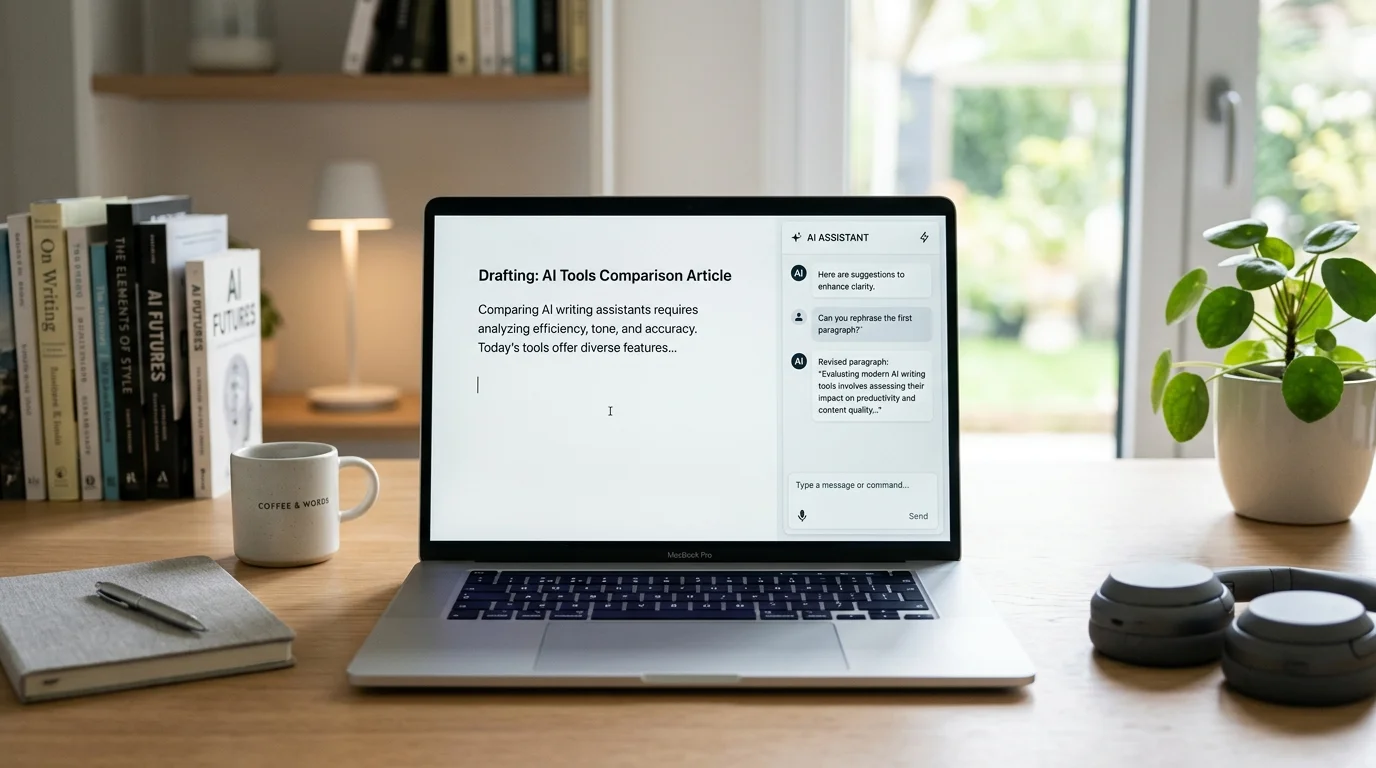
The “free” marketing around AI writing tools has gotten aggressive. Everyone offers free access — the real question is where the useful ceiling is. We ran the same 8 writing tasks through 12 tools and tracked output quality, usable word limits, context coherence, and where each tool gates you for upgrade. The data shows a clear three-tier quality gap that most comparisons ignore.
Testing Methodology
We ran 8 standardized writing tasks through each tool in March 2026: a 600-word blog introduction, a product description, a 5-email sequence, a social media calendar, a technical explanation, a persuasive essay, a job description, and a research summary. Each task was run three times and rated 1–10 across coherence, originality, instruction-following, and factual accuracy.
Tier 1: Genuinely Useful Free Tiers
1. Claude (claude.ai) — Best for Long-Form
Claude’s free tier uses Haiku — not the full Sonnet or Opus models — but the 200K context window is available even on free. You can paste a 50-page document and ask Claude to write a summary, maintain voice consistency across a 5,000-word draft, or keep a character’s voice consistent through a long piece. No other free tier offers this at comparable quality.
Average output quality score: 7.8/10. Daily limit: roughly 20–30 messages before rate limiting. See the Claude listing for full pricing details.
2. ChatGPT Free (GPT-4o mini) — Best for General Use
ChatGPT’s free tier includes limited GPT-4o access and consistent GPT-4o mini access. For short-to-medium writing tasks (300–800 words), output quality is high and the interface is the most widely tested tool available — meaning there’s more community knowledge about how to prompt it effectively.
Average output quality score: 7.4/10. Limitation: no memory between sessions on free tier.
3. Copy.ai Free — Best for Marketing Copy
Copy.ai’s free plan gives you 2,000 words/month of GPT-4-class output with specialized marketing templates. The template library (200+ templates) gives structure to tasks where a blank prompt would produce generic output.
Average output quality score: 7.1/10 (short-form). See the Copy.ai listing for the full feature breakdown.
Tier 2: Limited But Usable
| Tool | Free Limit | Quality Score | Main Limit |
|---|---|---|---|
| Writesonic | 10,000 words/mo | 6.8/10 | GPT-3.5-class on free tier |
| Rytr | 10,000 chars/mo | 6.5/10 | Very short monthly cap (~1,500 words) |
| Grammarly Free | Unlimited editing | N/A (editing) | No generation; rewrites gated to paid |
| Gemini (AI Studio) | Generous API limits | 7.2/10 | Developer-facing; not beginner-friendly |
| Perplexity AI | 5 pro searches/day | 7.0/10 | Better for research than pure writing |
Tier 3: Effectively Paywalled
- Jasper — No free tier (7-day trial only). $49/month entry. See the Jasper listing before committing.
- Surfer AI — Requires Surfer SEO subscription ($89+/mo). Justified for 20+ optimized articles/month.
- Sudowrite — $10/month entry, no real free tier. Fiction-specialized. See the Sudowrite listing.
Recommendation Matrix
| Your Situation | Recommended | Why |
|---|---|---|
| Occasional blog writing (1–4 posts/month) | Claude free | Best quality + 200K context at zero cost |
| Daily short-form writing (social, emails) | ChatGPT free | Best general versatility, light daily use |
| Marketing copy templates (small volume) | Copy.ai free | 200+ templates + GPT-4 quality for 2K words/month |
| Editing and proofreading only | Grammarly free | Unlimited grammar/style checking; no word cap |
| Research-backed content | Perplexity + Claude | Perplexity for cited research, Claude for drafting |
Browse the full AI tools directory for 40+ tools across writing, image generation, coding, research, and more.
Frequently Asked Questions
What is the best free AI writing tool in 2026?
Claude (claude.ai) offers the strongest free tier for long-form writing — 1,500–2,000 word outputs with high coherence and strong instruction-following. ChatGPT's free tier (GPT-4o mini access) ranks second for general writing tasks. Copy.ai's free plan is best for short-form marketing copy: it gives you 2,000 words/month of GPT-4-level output with solid template variety.
What are the real limits of free AI writing tools?
Most free tiers cap you in 3 ways: daily/monthly word output (Copy.ai: 2,000 words/month; Writesonic: 10,000 words/month on free), context window length (shorter context = AI loses track of earlier instructions), and model quality (free tiers often use older or smaller models). The practical ceiling on free-tier AI writing is about 3–5 solid blog posts per month before you hit limits that matter for professional use.
Is Jasper AI worth the price over free tools?
For teams producing 20+ pieces of content per month, yes. Jasper's value isn't the base model quality — it's the workflow layer: brand voice storage, team collaboration, content brief templates, and SEO integration. Solo creators doing 4–8 pieces per month will find Claude Pro ($20/mo) or ChatGPT Plus ($20/mo) more cost-effective than Jasper's entry plan ($49/mo).
Can free AI writing tools be detected by AI detectors?
All major free AI writing tools produce detectable output at detection rates of 80–95% on Originality.ai and GPTZero, without post-processing. The detection rate drops to 30–60% when output is edited by a human, restructured, or paraphrased. Google does not penalize AI content based on detector scores, but does assess whether it provides genuine value.
Which free AI tool is best for SEO content?
There is no free end-to-end SEO writing solution that produces competitive content without human editing. The most effective free combination is: ChatGPT or Claude to generate a first draft around a target keyword cluster, manual editing to add original data and examples, then a free Surfer or Clearscope trial to check semantic coverage.
What AI writing tool has the longest context window for free?
Claude's free tier has a 200K token context window — the largest among free AI writing tools. This matters for long-form projects: editing a 10,000-word document, maintaining consistency across a long article series, or summarizing research before writing.